
ERP Services & Solutions
We consult, design, implement, and optimize ERP solutions that unify your data, simplify operations, and improve efficiency across your business. Whether you need a custom ERP system, an upgrade to an existing one, or third-party integrations, we help bring finance, inventory, procurement, production, and reporting into one connected platform. With deep experience across diverse industries, including retail and ecommerce, finance and fintech, healthcare, and manufacturing, we deliver ERP systems that support your daily operations and long-term goals.
Book a call
VNEXT partnerships
VNEXT is an ERP development services company and a proud official partner of SAP, Odoo and Salesforce, giving businesses access to a wide range of proven platforms. Through our SAP implementation services, we enable improvements in enterprise resource planning and customer relationship management. Drawing on Odoo's capabilities, we implement versatile ERP software that supports operations across accounting, sales, manufacturing, and HR. As a Salesforce partner, we build custom CRM solutions that strengthen customer engagement and improve sales performance.
ERP services we offer
ERP consulting

Our ERP consulting covers discovery, strategy, and technology advisory, building a clear roadmap that matches your needs to the right ERP capabilities. With ~20 years of expertise, we help you define your strategy, select the right platform, and align it with your goals and operations.
ERP implementation
We handle the full implementation of both custom and off-the-shelf ERP software, from business needs analysis and deployment to post-launch support. Our experts take ownership of the entire lifecycle through a structured delivery approach and controlled data migration, reducing delivery risks.
ERP development
Our ERP team builds custom ERP systems with tailored features, modules, and integrations for organizations of any size and industry. Using a strong technology stack, we design scalable solutions that support your current workflows and connect smoothly with your existing systems.
ERP customization
We tailor both platform-based and custom ERP systems to fit your business, from design refreshes to feature-level revamps. Working with proven platforms, we help you get to deployment faster or enhance existing systems so they keep pace with evolving workflows and IT environments.
ERP integration
VNEXT connects your ERP with the tools across your technology landscape, ensuring smooth data flow between departments and greater efficiency. Through pre-built integrations, custom connectors, or middleware, our 15+ years of ERP expertise guide you from assessment to post-integration support.
ERP migration
We manage the full transfer of your ERP systems, data, and workflows to a modern platform or the cloud, with minimal disruption to daily operations. This includes cloud migration to AWS/Azure, system-to-system migration between ERP vendors, and accurate database mapping to the new structure.
ERP upgrade & modernization
We keep your systems current by managing complex ERP upgrades with a well-planned, low-impact transition. With SAP ECC 6.0 nearing end of life, we help you migrate to SAP S/4HANA, from system assessment to post-upgrade support.
ERP support & optimization
We provide ongoing support to keep your ERP systems running as intended, with limited impact on daily operations. Our services include troubleshooting, performance monitoring, and regular maintenance to lower the risk of downtime and system failure.
Custom ERP software
development case studies
EXPLORE ALL CASES
-

SANDVIK – SAP ERP deployment across Vietnam operations
VNEXT partnered with SANDVIK and MIBCON to deploy SAP across Vietnamese operations, managing the full implementation lifecycle from business process alignment to go-live and hypercare support.
Services delivered:
- Business process consulting across SD, MM, and FI modules
- Fit and gap analysis in collaboration with the global project team
- System configuration aligned with Vietnamese regulatory and corporate requirements
- Custom integration development including electronic invoicing
- User documentation, training, and acceptance testing support
-
Japanese plastics manufacturer – SAP automation for Vietnamese subsidiary
VNEXT implemented SAP automation for a Vietnamese subsidiary of a Japanese manufacturing group operating across plastic parts, packaging, and food processing, streamlining critical financial workflows and reducing manual processing across the organization.
Services delivered:
- FAST Ledger automation
- Exchange rate update automation
- Tax-inclusive and tax-exclusive expense recording
- Financial workflow optimization and testing
-
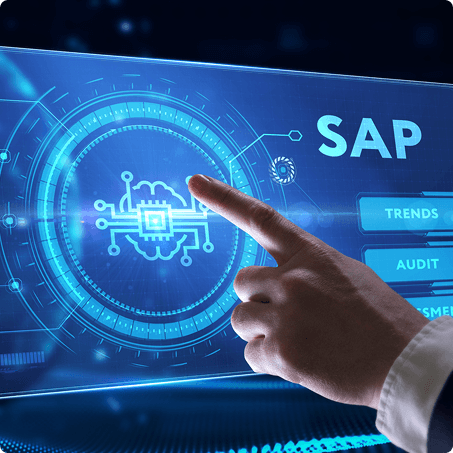
SAP offshore development – Japan partner program
Over four years, VNEXT has provided dedicated SAP development teams for SAP partners in Japan, delivering more than 20 projects across diverse industries with consistent quality and on-time delivery.
Services delivered:
- Dedicated SAP development team provision and management
- Multi-module implementation across SD, MM, FI, CO, PP, and QM
- Industry coverage spanning automotive, food manufacturing, chemical distribution, and commercial transactions
- Quality assurance and process compliance aligned with Japanese partner standards
Custom ERP and platform ERP
Which one to choose
| Aspect | Custom ERP software | Off-the-shelf ERP software |
|---|---|---|
| Functionality | Built around your company's specific needs, offering tailored functionality and integrations | Comes with a predefined feature set that may go beyond or fall short of your actual business requirements |
| Deployment speed | Slower to launch, given the time required for team assembly, solution architecture, technology selection, development, testing, and rollout | Quick to deploy for small and mid sized companies, though enterprises may face delays when the system needs deep customization to fit complex workflows |
| Customization capabilities | Extensive customization options to match evolving business needs | Customization is limited or unavailable in most cases |
| Scalability | Scalability depends on your company's own infrastructure | Scalability can be restricted, and scaling up often raises total cost of ownership |
| Control | Full ownership and complete control over development and management | Minimal to no control over how the solution is built or managed |
| Support | Maintenance and upgrades are handled by your in-house team or arranged with a development partner | First line support is typically included in the subscription, with advanced or premium plans available at extra cost |
| Cost | Higher upfront investment due to development, but often lower total cost over time with transparent pricing | Lower entry cost, though customizations, advanced support, and hidden fees (security, maintenance, upgrades) can add up |


The business value of ERP implementation


Better collaboration
ERP software consolidates data across business units and departments, cutting down on fragmentation and closing information silos. Teams gain a shared, unified view of operations, boosting efficiency and keeping everyone aligned.
Sharper decision-making
By organizing, securing, and centralizing information in one place, ERP systems support core business operations and deliver real-time insights, enabling faster, well-informed decisions across every department.
Lower costs
Improved visibility into business processes makes it easier to spot and eliminate inefficiencies. Automation accelerates task execution and cuts down on the human errors that come with manual data entry.
Full regulatory compliance
Modern ERP systems reinforce data security, traceability, and visibility, helping businesses meet regulatory standards, avoid costly fines, and limit exposure to data loss and breaches.



















Our clients say it best
-

In Vietnamese offshore development, technical skill is a given - passion makes the difference
VNEXT was chosen for their team's sincere passion and proactive drive to master challenging, high-value projects. Their flexibility in providing a dedicated, secure office space enabled a remarkably rapid product release in just six months. The project's success relied on top-tier talent using international UML diagrams to ensure seamless communication and high-quality results.
-

Dedicated development team for a Japanese distribution and logistics SIer
VNEXT brought the Magento expertise our food service project needed, delivering high quality even under tight deadlines through calm, eager-to-learn engineers and proactive communication. By using workshops to bridge cultural gaps around Japanese business customs, their flexible, dedicated approach makes them feel like a true extension of our own team.
-

How CAC Croit automated medical document processing with VNEXT's AI development services
VNEXT's expertise in natural language processing helped us automate the time-consuming task of sorting medical literature. Their team understood our background context so well that they consistently turned vague ideas into working tools within just a week. This reliable, Agile approach has made a real difference in our daily operations.
Our ERP platform expertise
Our team leverages SAP S/4HANA, an integrated ERP platform developed by SAP SE, to help businesses streamline core operations using built-in machine learning and AI capabilities.


- Fiori user experience
- Advanced analytics
- Flexible deployment
- Finance management
- Supply chain management
- Industry-specific solutions
Large enterprises and industries with complex operational needs, such as manufacturing and logistics
On-premises, cloud, or hybrid
Determined by database size and user count; custom quote required
As a certified Odoo partner, we support businesses in launching with essential modules and expanding over time, setting up functions like CRM, eCommerce, accounting, and inventory management to match your actual business operations.
- CRM and sales
- Website builder & E-commerce
- Accounting & finance
- Inventory and supply chain
- Manufacturing (MRP)
- Project management
- Human resources
- Process automation & AI integration
- Real-time dashboards
Small to mid-sized businesses and startups seeking an affordable, modular ERP solution
SaaS, PaaS, or on-premises
Community edition available at no cost; enterprise edition follows a subscription model, priced per user, with a free trial option
Recognized for its strength in IT Service Management, ServiceNow enables organizations to reshape workflows and coordinate services across departments through one centralized platform.
- ITSM, ITOM, ITBM
- HR service delivery
- Now Assist (AI) Integration
- Customer service management
- Governance/risk/compliance
- Performance analytics
- Low-code/No-code development
Large enterprises requiring a comprehensive, centralized approach to service management
Primarily cloud-based
Subscription-based; cost varies by modules selected and deployment scale
When off-the-shelf platforms can't meet your functionality, automation, or customization needs, we develop custom ERP solutions built around your exact requirements, including modules, features, and integrations that go beyond what standard platforms provide.
- Personalized modules and integrations
- Role-specific user interfaces
- Complete customization and configuration control
- Tailored compliance and security setup
Organizations with established workflows and complex business requirements that demand deep customization beyond what standard ERP platforms can offer
Flexible, tailored to your infrastructure and operational needs
No software licensing costs; investment is directed toward development, resulting in a lower total cost of ownership over time
ERP key modules we provide
Accounting & financial management
Track and analyze financial data to support reconciliation, budgeting, and tax management.
Customer relationship management (CRM)
Give sales and marketing teams a full customer view for better segmentation, targeting, and demand forecasting.
Human resource (HR) management
Manage the employee lifecycle, automating payroll, attendance, performance reviews, and training.
Supply chain management (SCM)
Improve supply chain visibility, helping control inventory, logistics, and supplier relationships.
Inventory management
Monitor stock levels in real time, set reorder thresholds, and track item movement to prevent shortages or overstocking.
Project management
Organize project budgets, resources, timelines, and team schedules into a single interface.
Warehouse management
Deliver visibility and control over warehouse operations, from receiving to order fulfillment.
Procurement
Streamline the purchasing cycle, manage vendor relationships, track quotes, and generate purchase orders.
Manufacturing / Production
Support production planning, shop floor management, bill of materials (BOM) handling, and quality control monitoring.
Order management
Capture sales orders, track progress through fulfillment, and verify credit limits.
BI & analytics
Turn business data into real-time dashboards and reports, supporting faster, more informed decisions.
Industry-specific ERP solutions we deliver

- Manufacturing —
- Finance & Banking —
- Healthcare —
- Retail & Ecommerce —
- Logistics —
- Education —
- Entertainment & Media —
- Travel & Hospitality —
- Energy —
- Professional services —
For manufacturers, our ERP solutions deliver end-to-end process visibility, helping teams identify inefficiencies, uncover optimization opportunities, and get the most out of resources and equipment.
- Production planning and scheduling
- Quality control
- Equipment maintenance management
- BOM management and MRP
- Supply chain management
- Inventory optimization

ERP development pipeline
at VNEXT
Discovery & analysis
We begin with a detailed review of your business strategy, workflows, and technology environment, capturing goals, end-user needs, and expectations to define clear requirements for the ERP system.
Design & technology selection
Using the defined requirements, we design the solution architecture, scope the integrations, and select the suitable ERP platform or technology stack, whether through configuration or custom development.
Planning
With the project scope confirmed, we set timelines, budget, key deliverables, resource allocation, and a risk management plan to keep delivery on schedule.
Development & customization
Following a structured DevOps approach, our team builds custom ERP software or customizes an existing platform to your specifications, then integrates it with core business systems such as CRM, vendor portals, or IoT tools.
Data migration
We assess your data for inconsistencies and map it to the new system, and migrate it securely from legacy platforms to the new ERP environment.
Quality assurance & testing
Our QA team runs rigorous testing throughout development to confirm the system meets functional and technical requirements and operates free of bugs or data integrity issues.
Go-live & user onboarding
We conduct user acceptance testing to validate performance under real conditions, then deploy to production and deliver user training to support adoption and change management.
Post-launch support
Following go-live, our team monitors performance, resolves issues, and manages system and security updates, keeping the ERP solution aligned with your business as it evolves.
Choose your
engagement model

Offshore development center
If expanding your team locally is too costly or too slow, an offshore engagement model gives you a dedicated, cross-functional team fully committed to your work, with the flexibility to scale up or down and the cost advantages of operating in a lower-cost environment.
Project-based development
When your requirements are stable and you want full cost and timeline visibility upfront, a fixed-priced model is the straightforward choice. Everything is documented in a Statement of Work, changes go through a formal process, and the focus is on delivering exactly what was agreed.
Dedicated team
Need a full team dedicated to your project for the long haul? We assemble the right mix of engineers, skills, and industry knowledge so you can move fast on ambitious projects without the cost and delay of local hiring.
More services we cover


FAQs
ERP software connects core business functions, such as finance, inventory, HR, and sales, into one system rather than scattered spreadsheets and separate tools. This creates a single source of truth, helping reduce costs, minimize errors, and support faster decisions across departments.
Key considerations include company size, industry-specific needs, and growth plans. It's important to evaluate how well the system fits existing processes, whether it scales as the business grows, the quality of vendor support, and the total cost over time rather than just the upfront price.
Implementation timelines vary based on company size and process complexity. A smaller business may see a working system within a few months, while a larger organization with multiple departments could take a year or more.
Costs vary significantly depending on the platform, level of customization, and organizational size. Total spend, including software, consulting, training, and integration, can range from tens of thousands to several hundred thousand dollars.
Yes. Most ERP platforms are designed to connect with commonly used tools such as CRM systems and BI software. This allows data to move automatically between systems rather than requiring manual entry across multiple platforms.
The process typically starts with defining business requirements, shortlisting vendors, reviewing demos, and asking detailed questions before signing a contract. Factors worth evaluating include functionality, performance, security, integration flexibility, deployment options, industry fit, user experience, support quality, and overall cost. Given the number of factors involved, many organizations work with an independent ERP consultant to help compare options and identify the best fit.
Evaluating a vendor's track record is a useful starting point, including the number of ERP projects completed, the industries served, and experience with organizations of similar size and complexity. Relevant certifications from platforms such as SAP, Odoo, or Microsoft can indicate a strong level of technical expertise. It's also worth clarifying team structure, including whether dedicated consultants are assigned, and what post-launch support looks like.
Let's talk
Ready to get results?
Our team is here to help.
 20 REVIEWS