Future-proof Your Systems with Legacy Modernization Services
Legacy modernization is a well-planned strategy to move away from spending 70-80% of your IT budget on maintaining outdated systems.
As a trusted DX partner, VNEXT HOLDINGS helps businesses replace end-of-life systems with scalable, cloud-ready platforms through a structured, low-risk process, moving from monolithic frameworks to modular, AI-ready architectures.



What legacy systems are
costing your business

Rising costs
60% of CTOs say their legacy infrastructure is too costly and can't support modern applications. Legacy-heavy organizations put 60-80% of their IT budget toward maintenance, leaving just 20-40% for innovation.
Security & compliance
Node.js v20, Angular 19, and .NET 8/9 are among the frameworks nearing outdated, which means security patches will stop. This makes systems more exposed to breaches, pushing insurance premiums up 40-60%.
Falling behind on AI
AI tools need clean APIs and real-time, event-driven systems to work well, but most legacy systems don't have this because of data silos and outdated batch processing. As a result, businesses running on legacy systems roll out new features 25-50% slower than cloud-native competitors.
Customer experience risk
72% of IT decision-makers say legacy systems make it harder to meet customer expectations and slow down product delivery. This weakens both competitiveness and customer retention.
Legacy application
modernization services we offer
Legacy system migration
Our team migrates legacy applications, or specific components, to the cloud, closing integration gaps and restoring compatibility with modern third-party services. We handle the full complexity, from architecture to data models, delivering a modernized system with minimal risk.
Legacy cloud migration
We move on-premise applications to AWS, Azure, or GCP through a proven, structured process that improves internal communication and lowers total cost of ownership. Our specialists give your business a cost-effective path to long-term scalability and a stronger competitive position.
SAP migration
Our experts upgrade SAP ECC 6.0 systems to SAP S/4HANA to meet current architecture and support requirements. We manage every stage, from system assessment to data conversion and go-live, keeping your SAP environment supported, secure, and ready to scale.
Database modernization and migration
Our team restructures legacy databases and migrates them to scalable, cloud-native architectures, removing performance issues and setting the foundation for AI, analytics, and automation. We keep downtime risk low throughout while strengthening reliability and security.
Application migration
VNEXT moves applications from legacy environments to on-premises or cloud infrastructure with minimal disruption. Our specialists manage the process end to end, from choosing the right migration strategy to configuring the target environment and testing the final result.
Legacy application modernization
Our experts update applications built on outdated technologies and architectures that limit what the business can do and slow teams down, replacing rigid, hard-to-maintain software with modern, easy-to-manage systems.
Code refactoring and optimization
Our engineers restructure existing code to eliminate inefficiencies, without altering core functionality. As we address technical debt, performance, scalability, and security all improve, giving teams room to launch new features faster.
Software re-architecting
Our team breaks complex monolithic systems into modular, event-driven architectures, restructuring high-throughput modules for better performance. We keep your core business logic intact, giving you a system that scales and recovers faster.
Application UX/UI redesign
Our specialists modernize interfaces to feel more intuitive and better reflect brand identity, making information easier to access across every touchpoint and creating a stronger user experience.

Application integration
We build secure, high-performing APIs and connectors that enable fast data exchange between software components, internal systems, and third-party services, extending what your applications are capable of.
Application containerization
Our team packages runtime components like files, libraries, and dependencies into lightweight, isolated containers, breaking monolithic systems into microservices for deployments that are simpler to manage.

Our legacy modernization
methodologies
| Methodology | What it involves | Timeline | Cost | Best for |
|---|---|---|---|---|
| Rehost (Lift & Shift) |
|
A few weeks to 1-2 months | Lowest | Reducing infrastructure costs quickly without disrupting existing functionality |
| Replatform |
|
1-3 months | Low to moderate | Improving performance without a full rebuild |
| Refactor |
|
2-4 months | Moderate | Addressing technical debt when keeping the underlying logic |
| Re-architect |
|
4-9 months | Moderate to high | Businesses needing long-term scalability and flexibility |
| Rebuild |
|
6-12+ months | High | Systems that can no longer support the business, technically or functionally |
| Replace |
|
3-9 months, depending on solution complexity | Varies | When modernizing the existing application isn't cost-effective or practical |
The key values of system modernization
Saving IT budget
Modernized companies redirect 40-60% of maintenance spend into feature development and initiatives, turning technical debt into budget for faster innovation and product growth.
Competitive edge
Businesses that build innovation into daily operations meet current and future demands more easily, staying ahead of competitors still running on outdated systems.
Stronger security and compliance
Patched frameworks keep audits clean and exposure low. Decoupled architectures isolate incidents fast, reducing the risk of unapproved access and costly data breaches.
Less maintenance overhead
Modern tools integrate more easily with current infrastructure, cutting the ongoing maintenance and updates legacy systems typically demand from IT teams.
AI-ready architecture
Structured, API-first data layers replace undocumented legacy logic, giving AI agents a reliable foundation to operate on and actually deliver value.
Easier system integration
Connecting systems into one source improves communication across departments, replacing scattered data with a clearer, more reliable operational view.





















AI-Powered Product Recommendation Engine for E-Commerce
Retail · AI & ML · 6 months
Omnichannel Inventory Management System
Retail · Web App · 8 months
Smart POS Integration with Cloud Analytics
Retail · Cloud & DevOps · 4 months
Customer Loyalty Platform with Gamification
Retail · Mobile App · 5 months
-
AI-Powered Product Recommendation Engine for E-Commerce
Retail · AI & ML · 6 months
-
Omnichannel Inventory Management System
Retail · Web App · 8 months
-
Smart POS Integration with Cloud Analytics
Retail · Cloud & DevOps · 4 months
-
Customer Loyalty Platform with Gamification
Retail · Mobile App · 5 months
Our clients say it best
-

In Vietnamese offshore development, technical skill is a given - passion makes the difference
VNEXT was chosen for their team's sincere passion and proactive drive to master challenging, high-value projects. Their flexibility in providing a dedicated, secure office space enabled a remarkably rapid product release in just six months. The project's success relied on top-tier talent using international UML diagrams to ensure seamless communication and high-quality results.
-
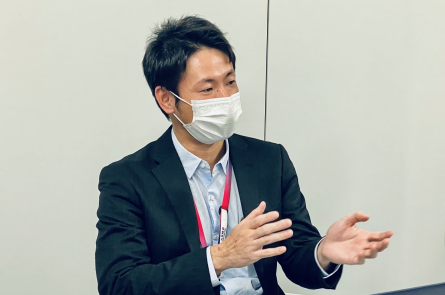
Dedicated development team for a Japanese distribution and logistics SIer
VNEXT brought the Magento expertise our food service project needed, delivering high quality even under tight deadlines through calm, eager-to-learn engineers and proactive communication. By using workshops to bridge cultural gaps around Japanese business customs, their flexible, dedicated approach makes them feel like a true extension of our own team.
-

How CAC Croit automated medical document processing with VNEXT's AI development services
VNEXT's expertise in natural language processing helped us automate the time-consuming task of sorting medical literature. Their team understood our background context so well that they consistently turned vague ideas into working tools within just a week. This reliable, Agile approach has made a real difference in our daily operations.
Advanced technologies we
use
to modernize legacy
systems

Artificial Intelligence
We embed AI capabilities into modernized legacy systems, replacing manual processes with self-learning models that support real-time analytics, accurate predictions, and automated decision-making across core business functions.


Computer vision
We equip businesses with computer vision algorithms that support tasks like image analysis, quality management, and inventory tracking, extracting insights from visual data to inform business decisions.

IoT
Our team develops networks of connected devices that exchange data with other systems over the internet. We integrate software with industrial or consumer IoT networks, enabling real-time data collection and processing to support daily operations.

Blockchain
We modernize your solution with blockchain-based functionality, adding transaction transparency and stronger security through self-executing smart contracts.
What makes our legacy
modernization services different

Cloud-first execution
VNEXT brings extensive experience transitioning complex legacy environments to modern cloud ecosystems. Our architects tailor each migration to meet business-critical goals, balancing performance, compliance, and cost efficiency across AWS, Azure, and GCP.

Scalable enablement
Every modernization strategy we deliver builds on modern DevOps practices, serverless architecture, and infrastructure-as-code. Using Terraform, Pulumi, and GitOps workflows, we help your systems gain agility and traceability from day one, supported by CI/CD pipelines and automated QA.

Enterprise-grade engineering
Our engineers bring deep expertise in legacy modernization, platform re-architecture, data restructuring, and security hardening at scale. We deliver change across highly regulated industries and enterprise-critical systems, tying every decision to a measurable business outcome.

Deep domain expertise
Our team combines technical depth with industry-specific knowledge and real-world experience across industries and product types, helping us modernize legacy systems for each specific sector.






Choose your
engagement model

Offshore development center
If expanding your team locally is too costly or too slow, an offshore engagement model gives you a dedicated, cross-functional team fully committed to your work, with the flexibility to scale up or down and the cost advantages of operating in a lower-cost environment.
Project-based development
When your requirements are stable and you want full cost and timeline visibility upfront, a fixed-priced model is the straightforward choice. Everything is documented in a Statement of Work, changes go through a formal process, and the focus is on delivering exactly what was agreed.
Dedicated team
Need a full team dedicated to your project for the long haul? We assemble the right mix of engineers, skills, and industry knowledge so you can move fast on ambitious projects without the cost and delay of local hiring.
Cost factors of modernization services

Project timeline

Scope and complexity

Engagement model

Team hourly rates

Tech stack selection

Level of customization
Technologies we work with
-
 React
React
-
 Angular
-
 Vue
Vue
-
 Node
Node
-
 React Native
-
 Next
Next
-
 Ember
Ember
-
 HTML
HTML
-
 CSS
CSS
-
 JavaScript
-
 .NET
.NET
-
 Golang
-
 PHP
PHP
-
Node.js
-
 Java
Java
-
 Python
-
 Rust
Rust
-
 C/C++
C/C++
-
 Ruby
Ruby
-
 Unity
Unity
-
 AWS
AWS
-
 Google Cloud
-
 Azure
Azure
-
 Docker
-
 Kubernetes
-
 Terraform
-
 Ansible
-
 Prometheus
-
 Puppet
-
 Jenkins
-
 Elasticsearch
-
 GitLab CI/CD
-
 iOS
iOS
-
 Android
-
React Native
-
 PWA
PWA
-
 Flutter
-
 Swift
Swift
-
 Kotlin
-
 Open NLP
-
 TensorFlow
-
 LangChain
-
 LlamaIndex
-
 Hugging Face
-
 MySQL
MySQL
-
 Microsoft SQL Server
-
 Azure SQL
-
 PostgreSQL
-
 Oracle
-
 MongoDB
-
 DynamoDB
-
 Apache Hive
Legacy modernization process
we follow
Legacy system assessment
Our team reviews your legacy architecture and system dependencies, alongside your business needs and available documentation. This includes a cybersecurity assessment, usage analysis, and total cost of ownership calculation, helping us identify key issues and risks before any modernization work begins.
Modernization model selection
Based on the assessment, we determine the right modernization approach and technology stack, define project scope, and build out a detailed plan, including budgeting, risk management, and a proof of concept to validate the chosen direction before full implementation.
Software modernization
Our team executes the modernization plan from start to finish, delivering comprehensive documentation throughout and testing the solution thoroughly, including user acceptance testing to confirm it meets real-world needs.
Post-modernization support
Once the solution is live, we support user and administrator training, monitor system performance, and troubleshoot issues as they arise.
More services we cover


FAQs

Legacy modernization reduces technical debt, strengthens security, and improves system performance, while giving the business faster time to market, lower long-term costs, and greater ability to scale. It also makes the software easier to maintain and better positioned to support future growth.

Costs depend on the chosen methodology, the scope and complexity of your systems, the engagement model, and the level of customization required. A lift-and-shift rehost is the most affordable path, while a full rebuild or re-architecture requires a larger investment. After an initial assessment, VNEXT provides a detailed estimate covering timeline, budget, and expected total cost of ownership savings.
Timelines range from a few weeks for a simple rehost to 12+ months for a complete rebuild. Most replatforming and refactoring projects fall within 1-4 months, while re-architecting a monolith into modular services typically takes 4-9 months. The exact duration depends on system complexity, data volume, and integration requirements.
Look for a partner with a proven track record across modernization methodologies, certified cloud expertise on AWS, Azure, and GCP, and experience in your industry. It's also worth evaluating their assessment process, how they manage migration risk and downtime, and the post-modernization support they provide, including training, monitoring, and ongoing optimization.
Let's talk
Ready to get results?
Our team is here to help.
 20 REVIEWS