Chia sẻ từ khách hàng về VNEXT HOLDINGS
V-CUSTOMER
The key to business system development success was sharing the goal and vision we were aiming for
28/07/2026
AI CROSS Co., Ltd., founded in 2015, innovates the business communication platform, powering how companies message, collaborate, and transform the way they work, all from one place. Alongside its SMS and RCS messaging services, it focuses on "InCircle," a business chat service that drives workstyle transformation, and on AI solutions that analyze chat data for the HRTech field.
Partnership overview
AI CROSS engaged VNEXT to take over the ongoing development and enhancement of two mature, live products, the corporate messaging service "AIX Message SMS" and the business chat platform "InCircle." Chosen for its price advantage and rigorous quality management system, VNEXT formed a team of around 6 engineers in Hanoi working alongside bridge SEs in both Tokyo and Hanoi, a flexible structure that kept communication seamless across borders. Beyond steady, test-driven delivery, VNEXT's engineers proactively proposed OS-roadmap enhancements rather than simply executing orders, embodying the client's belief that the true key to offshore development success lies in sharing goals and vision as long-term partners.
Testimonial details
For AI CROSS Co., Ltd., this was the first time commissioning a Vietnamese company. We spoke with Mr. Moriyama, the project lead who visited VNEXT's Hanoi office many times, about VNEXT's development quality and the keys to offshore development success.
Q: What prompted AI CROSS to begin offshore development?
Mr. Moriyama: Our company had already been engaged in offshore development for some time, and the biggest reason was the difficulty of securing engineers domestically amid rising labor costs and a talent shortage. Developing "InCircle," the business chat platform we provide, requires multiple skill sets, iOS, Android, Windows apps, and web systems, and securing engineers with all those skills is harder still. So rather than confining ourselves to domestic engineers, we actively pursued offshore development.
Q: Why did you choose VNEXT?
Mr. Moriyama: Until then, our company had mainly done offshore development with East Asian firms, but from around 2017, rising prices made the cost advantage harder to realize. While we were considering a new partner, an acquaintance company introduced us to VNEXT. Several companies were on our shortlist at the time, but after comparing them, we chose VNEXT for its price advantage and its quality management system.
The most difficult thing in offshore development is quality management. There are many cases where expressions that would get through to a Japanese person don't land, turning into bugs, or where you're told "we never heard about that" at delivery. Against that backdrop, VNEXT was introduced to us as a firm with solid quality management. In offshore development, where you often have to give up on a certain level of quality, I was surprised that this much was possible. Taking their track record of activity in Japan into account as well, we decided to go with VNEXT. As an IT outsourcing partner, they stood out precisely on the dimension that usually gets compromised.
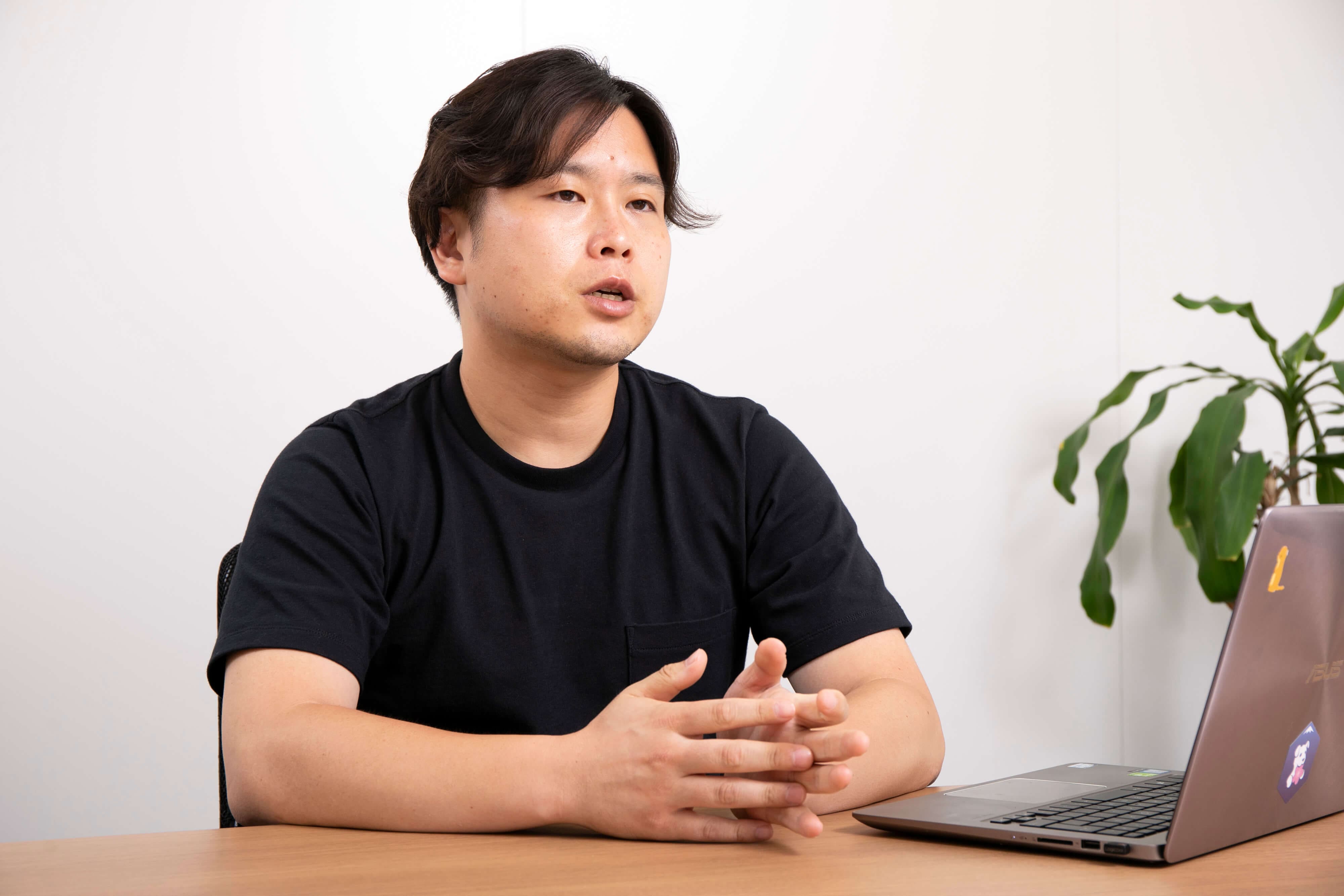
The lead for this offshore development project: Mr. Moriyama
Q: What products did you build through offshore development this time?
Mr. Moriyama: This time we commissioned VNEXT to develop two products. The first, "AIX Message SMS," is a corporate SMS send-and-receive service. It uses a proprietary system integration method leveraging HTTPS and SMPP (v3.4) APIs, and supports all carriers. The second is "InCircle," mentioned earlier, which handles a range of daily tasks from retrieving documents to booking meeting-room schedules. Both services had already been released and were being used by many customers; this time we commissioned feature enhancements.
VNEXT came on board in 2018. "InCircle" undergoes additional feature development on roughly half-year cycles, while "AIX Message SMS" had its new platform built over about a year and has entered the maintenance phase. Development of "AIX Message SMS" and "InCircle" began around 2014. Later, as service usage expanded and the products matured, in 2018 we handed them over from the previous vendor to VNEXT.
Q: What kind of structure did you use to develop "AIX Message SMS" and "InCircle"?
Mr. Moriyama: For each of "AIX Message SMS" and "InCircle," we set up a three-person team in-house, a PM and an infrastructure engineer from our side, joined by a bridge SE from VNEXT. In Hanoi, a team of about six engineers was formed.
Mr. Son, who stood as the bridge SE in Tokyo, is VNEXT's vice president, so a full-time dedicated role was difficult. So we also placed a bridge SE in Hanoi and adopted a somewhat unusual structure where the Tokyo and Hanoi bridge SEs worked together. When Mr. Son was unavailable, we could still talk with the Hanoi bridge SE, which gave the development structure flexibility. I served as the lead for both the "AIX Message SMS" and "InCircle" teams.
Q: What were the challenges in moving development forward?
Mr. Moriyama: I imagine it was hard for them to understand a live, existing system based on Japanese documentation alone. Because the market was expanding at quite a pace, and this is a bit embarrassing to admit, there were even specifications not recorded in the documentation. For these issues, we asked VNEXT to analyze the source code, and because they recorded the results back into the documentation, handovers went smoothly even when VNEXT's engineers rotated. I think we spent about half a year understanding the existing system. We pushed back the major-version release so that development could proceed carefully with some time to spare.
Q: What did you keep in mind as development progressed?
Mr. Moriyama: In the early stages, we held a face-to-face meeting of about 30 minutes to an hour every day to check progress and issues. Since it's an existing system, tracing the code when something comes up takes considerable time. Depending on the issue, there were some that our own people could handle faster than VNEXT. In the meetings, we made those distinctions.
Q: What was your impression of VNEXT's engineers?
Mr. Moriyama: Since this was our first offshore development with a Vietnamese company, I was uneasy at first about the engineers' skills and cultural differences. But Mr. Son, the bridge SE, not only had high technical ability but also understood how Japanese companies work, so it was easy to proceed. His spoken Japanese is a little distinctive, but his listening, reading, and writing are, I'd say, quite strong. The communication needed for the work was no problem at all, and I never felt any cultural gap. If anything, even in an unfamiliar environment, I could feel them trying their utmost to meet what we were asking for, and I was very grateful for that.
I went to the Hanoi office several times, and compared with Japan there were many young people, full of energy. The office had the atmosphere of a major Japanese IT venture, an environment set up so engineers could work comfortably. At first I'd thought it might just be a company that had gathered a lot of engineers, but the clear division of roles put me at ease. There was a sales team and a quality management department, and what impressed me most was their deep interest in Japan. Some actively communicated with us, and it gave us great stimulus. Many Vietnamese are smaller in build than Japanese, so VNEXT's vice president Mr. Mori looked like a giant (laughs).
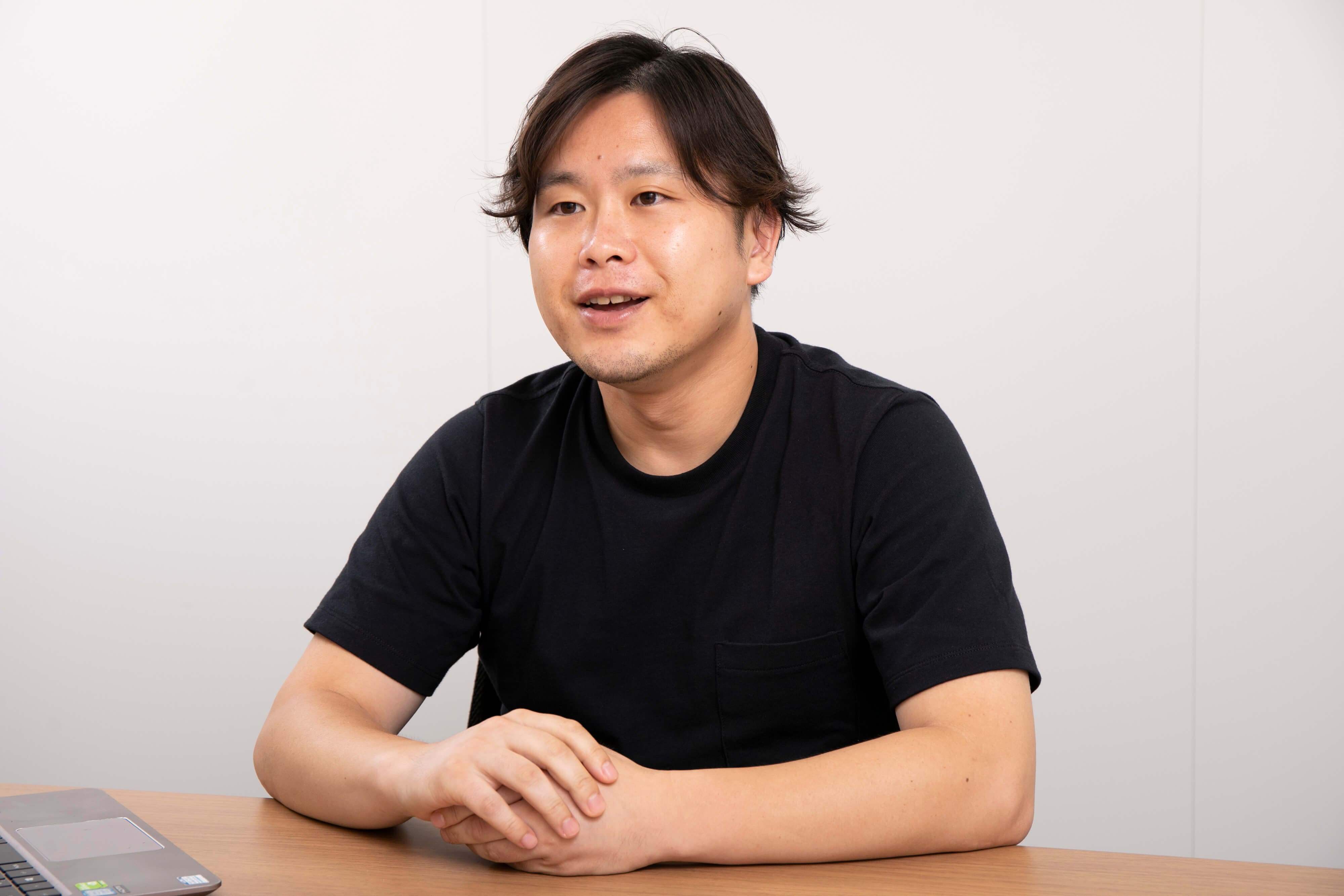
Visiting Hanoi and deepening ties with the local engineers
Q: How was VNEXT's development quality?
Mr. Moriyama: I'm satisfied. VNEXT has a quality management department and testers, so the develop-test-fix-test process was stable. They handled tasks steadily as well. Most of the current bug fixes are cases where past problems have surfaced, so on the quality front there are no particular issues.
With quality management, even 1,000 checklist items don't put you at ease. What matters is information like why each item is valid, what pattern the defects emerged in, and for what reason they were resolved. Without that information, you can't tell whether you've flushed out all the defects. So on day one, when I asked VNEXT to use the same management method as our company, the very next day they produced a graph of the analysis results, which amazed me.
Q: What left an impression on you in this offshore development project?
Mr. Moriyama: With AI language analysis, I keenly realized the language barrier is bigger than I'd thought. When creating training data for the AI, I'd assumed a Vietnamese person who knows Japanese would be fine, but once we actually tried, it turned out to be quite difficult. I had a Japanese-speaking university student in Hanoi create the FAQ set that serves as the base for the AI's answers, but when a Japanese person reviewed it, something felt off. Even when conversation and email communication are fine, training an AI engine to read the fine nuances of Japanese is better done by a Japanese person, which was a lesson for both sides.
Our service handles text, so our AI-related projects also depend on text, but VNEXT has a rich track record in AI for image processing and search. For AI that doesn't involve language, I believe VNEXT can bring their strengths fully to bear.
Q: What is the key to offshore development success?
Mr. Moriyama: I've driven various offshore development efforts, and the big reason Japanese companies fail is dumping everything on the vendor. Just because a partner handles things well, entrusting them with every last thing tends to cause problems down the line.
As a service vendor, our development style is to pursue something better, endlessly. "We made the specification, so just do exactly that" won't produce a good service. Every IT company has limited internal resources. To make the most of them and create something better, it's important that everyone involved shares the market trends, the vision, and the goals surrounding the service. That way, even if you commission A, it can lead to broader proposals like A+1 or B.
Take "InCircle." VNEXT's engineers know Android and iOS trends better than we do. They actually proposed things like "in two months it'll be like this, in half a year like that, so let's build this in now." With the order-taking style of development common in Japan, where the request is simply "please support the next OS version," I think they'd only do that much. To stand on a long-term view as partners and build a good service together, sharing goals and vision is indispensable.
To avoid dumping everything on them, taking responsibility ourselves for process management and certain domains, while carefully discerning what can be entrusted, is important for making offshore development succeed. If you convey what you're thinking and have the partner adopt the same method, things go smoothly. To that end, we try to hand over as much of the necessary information and templates as we can.
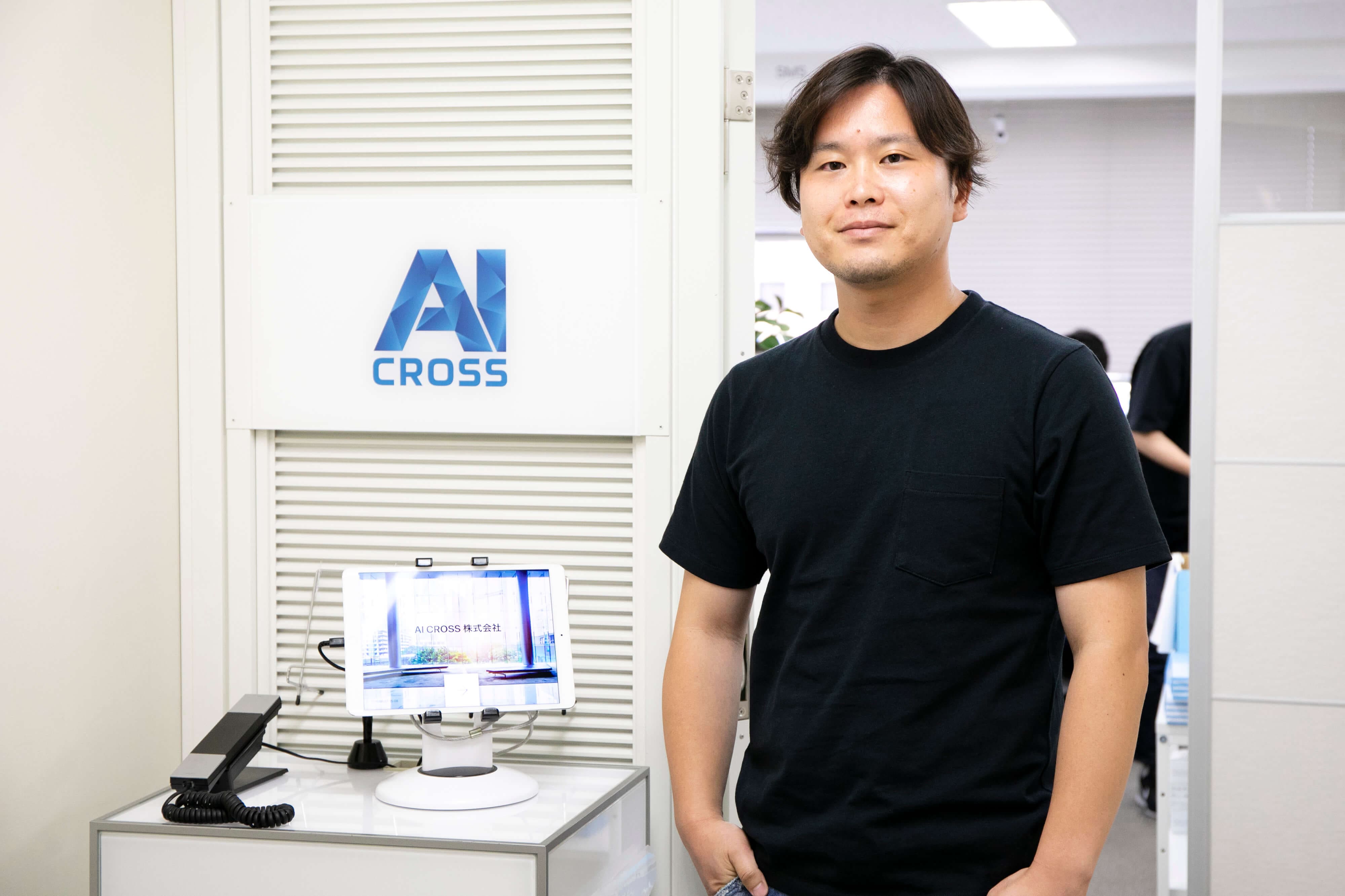
Mr. Moriyama says that aiming at the goal together as partners, and clarifying the scope of what's commissioned, is the key to success
Q: What about going forward?
Mr. Moriyama: The large-scale update of "AIX Message SMS" is scheduled for release at the end of this year. It's a project we've taken our time with, so we're just about to enter the final touches. For "InCircle," which has already been released, they've proposed automating the enormous volume of testing needed every time the OS updates. Keeping an existing service running without a hitch while adapting it to a new OS is labor-intensive, so I have high hopes for a mechanism that could help. We're currently considering whether to adopt it in the next phase. Going forward, I hope to continue receiving VNEXT's cooperation.
***
About VNEXT HOLDINGS
Evolving from VNEXT SOFTWARE, founded in 2008, VNEXT HOLDINGS is a trusted AI-augmented software development and digital transformation (DX) partner. Headquartered in Vietnam with representative offices in Japan, our team of over 550 specialists has delivered more than 800 projects for over 400 clients across the Asian market, with expertise spanning custom web and app development, AI and ML, blockchain, enterprise system solutions, SAP ERP, legacy modernization, and offshore development.
Drawing on deep experience across manufacturing, retail, healthcare, finance and fintech, logistics, and education, we apply globally recognized standards to help enterprises modernize, scale, and compete with confidence. Committed to supporting businesses at every stage of their DX journey, VNEXT HOLDINGS combines AI-powered services and solutions with an AI-augmented workforce to deliver greater speed, scalability, and quality.